
Microalgae are the primary producers in the marine environment, thriving in warm, sunlight-exposed waters. Nevertheless, some of them can be harmful due to toxin production, oxygen depletion, or even by achieving high-density levels that can clog an animal’s respiratory system. These are known as Harmful Algal Blooms (HABs), which are becoming more frequent due to climate-driven warming of seawater.
HABs can affect the marine environment and aquaculture through toxin production, oxygen depletion, or even achieving high-density levels that can clog an animal’s respiratory system. The figures below show shows a comparison of HABs events from a global to regional perspective, indicated by type.
Global to Regional Comparison of HABs Events (1980 – 2024)
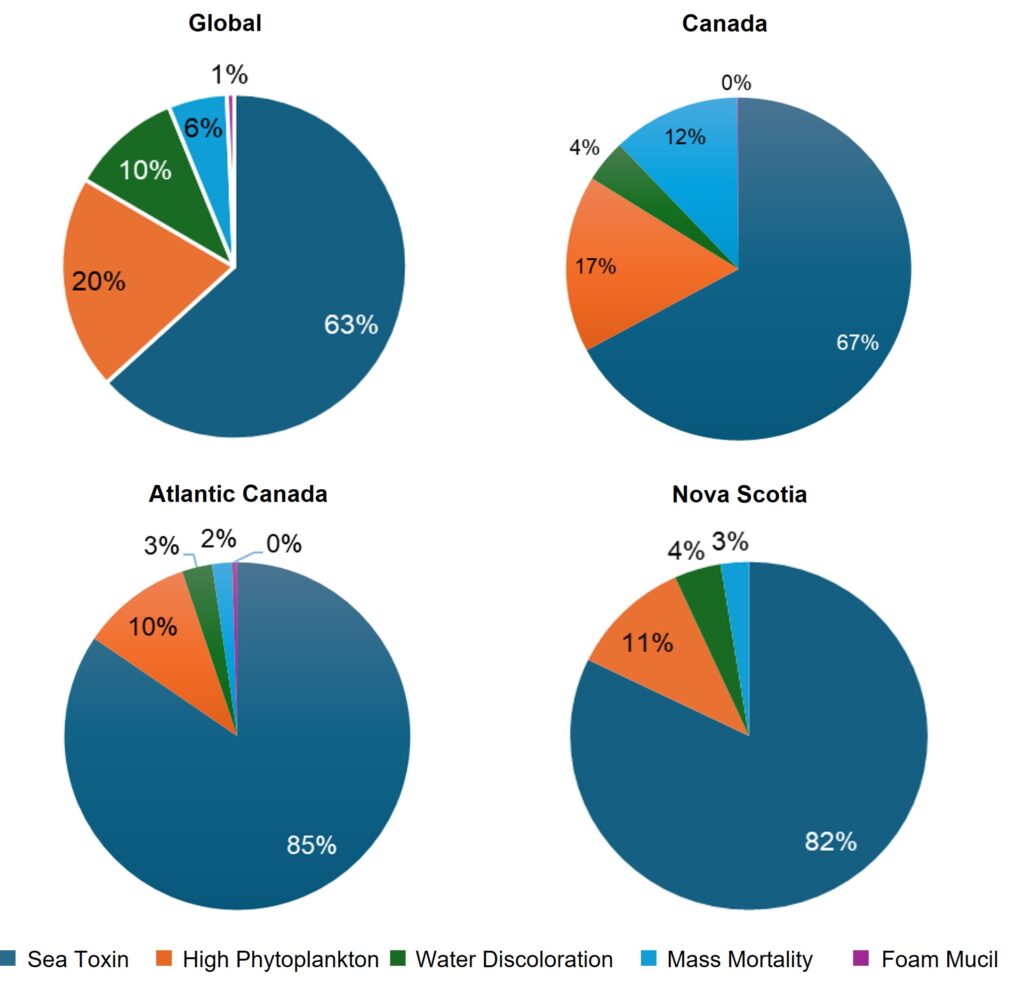
Data source: HAEDAT (IOC-UNESCO, 2024)
The figure below depicts the last 45 years of toxic HAB events by syndrome type, from global to Nova Scotia waters. Syndromes can be contracted through direct contact, ingestion of contaminated seafood or inhalation of aerosolized toxins. The effects vary from dermatological to neurological in humans and animals. Diarrhea and vomiting are the most common symptoms, but severe cases can be fatal.
Historical HAB Toxic Events Classified by Type of Syndrome (1980-2024)
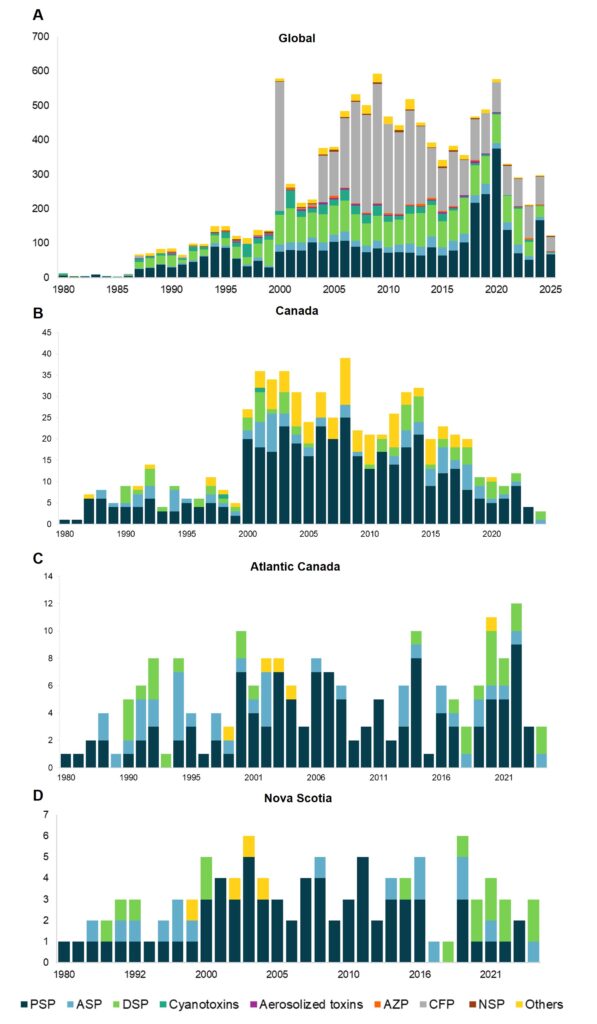
PSP: Paralytic Shellfish Poisoning
ASP: Amnesic Shellfish Poisoning
DSP: Diarrhetic Shellfish
AZP: Azaspiracid Shellfish Poisoning
CFP: Ciguatera Fish Poisoning
NSP: Neurotoxic Shellfish Poisoning
Data source: HAEDAT (IOC-UNESCO, 2024)
